Sunday, December 19, 2010
Pops Farrar, the son of the speakeasy songster
This summary is not available. Please
click here to view the post.


Pops Farrar, the son of the speakeasy songster

Sparked by the recent inaugural Uncle Tupelo tribute show in St. Louis, I am posting some chapters from my unpublished musical memoir that deal with those guys. This is Chapter 120, which follows immediately upon my previous post, "The way the music dies" and concludes the book.
The son of the speakeasy songster
By Chris King
One night that spring, 1997, I went to see a local folk rock band, One Fell Swoop, at Focal Point. The venue, with its wooden school chairs bolted to the floor, had a claustrophobic atmosphere. During a break between sets, I stepped outside to feel the evening and have a smoke on the sidewalk. I was greeted there by the wife of the drummer, who pointed me toward an old man smoking a homerolled cigarette.
“This is Pops Farrar,” she said to me. And to him: “Chris is really into folklore-type stuff.”
“Well, I got considerable of that dern folklore,” Pops bust right out the gate and said, and it certainly looked like that was true. He was wearing a soiled fishing hat on which he had pasted a Route 66 sticker. His long face had all the cracks of a well-traveled road. Actually, this face was too animated for that comparison – it had all the twists and eddies of a river.
“Yeah, my old bandmate Chris Bess told me about you,” I said. “You know, Chris plays accordion.”
“I know it!” Pops enthused.
“He said you play Cajun accordion.”
Like the rest of us, Chris Bess always looked up to Jay Farrar of Uncle Tupelo. More than most of us, Chris made actual inroads into befriending him. Chris had at least learned that the whole Farrar family was musical, starting with the old man, Pops. One of Jay’s older brothers, Dade, played stand-up bass in One Fell Swoop, the band on the bill tonight, which explained Pops’ presence at the show.
“Oh, I guess I stagger around on the accordion,” Pops said. “But not only that Cajun stuff. I do a little bit of everything. And I got my old concertina I picked up in France, while I was out with the Merchant Marine. I do chainsaw sculptures, too, of Civil War generals and old Geronimo. I got lots of interests.”
Pops’ face bloomed with smoke, and a big smile. Folklore was opening another new trail for us, one that circled around to where we began. I asked for the old man’s phone number, saying I wanted to come over to his house and record his accordion and concertina, and maybe take a look at those chainsaw sculptures.
“Don’t just talk about it, old Chris,” Pops practically shouted, gesturing with his homerolled cigarette. “Do it!”
We did it. Elijah took a break from his work in the Nashville power pop underground, packed up a portable studio, drove to St. Louis, and we trekked across the Mississippi River to record Pops Farrar.
Pops lived on the outskirts of Belleville, Illinois, a town Uncle Tupelo put on the map, in what he called “the Belleville rainforest”. The jungle image was conjured by the ravine next door, which was overgrown and noisy with the calls of birds and frogs. Pops lived just above the bluffs separating the American Bottom, where Granite City sprawled, from towns like Belleville nestled in the hills that smoothed out gradually into corrupted prairie and plains.
Pops’ house was built into the side of a hill. He stepped out from the basement at the bottom of the hill to greet us. I could see chainsaw sculptures of Civil War generals and Indians standing woodenly around the bushy yard, but Pops steered us inside so he could hook up his laser karaoke.
“I like the sound I get out of this,” he said.
His karaoke rig sat at the foot of a recliner, which was bent almost completely out of shape by God knows how many years of Pops at rest. Tobacco smoke formed a solid brown smog in the room.
Pops plopped down on a saggy couch. He had to clear off a flattened foam pillow and threadbare sheet for us to join him – it looked like this little couch was serving as his improvised bed. “Stag beer’s in the garage,” he announced, gesturing toward a door between the recliner and a dingy bathroom.
I sprang for a round, admiring his set-up. This old guy was completely cocooned in his basement studio, cooled by the Earth of the hill and shade trees, with walk-out access to his own rainforest sculpture garden.
“I'm like a crawdad down in here,” Pops said, jiggling the input jack on his karaoke rig, which made the echoey sounds of space junk. “Now that I’m alone, I just crawdad down in here, and snap up a claw.”
I popped a Stag into his snapped-up claw, and said, “Pops, let’s not with the karaoke machine.” I implored Elijah for help with my eyes.
“Let’s just put you on the couch with the accordion,” Lij said. “Let’s try everything raw first. We can add effects later, if you like that echo.”
“That cocksucker,” Pops said, turning his back on the karaoke rig. “Crapped out on me, anyway.”
Elijah set up the equipment, and I joined Pops on the couch. I had to tense my legs to keep from sliding toward him in the middle, which was hollowed down from the nightly weight of his sleeping body. We bantered as he wheezed dust off his accordion and finagled a coat hanger, which clasped a harmonica, around his scrawny neck. On his head was a filthy fishing hat, pasted with a label from a bottle of Jaegermeister.
“I first picked up music from my dad down in Salem, Missouri, in the Ozarks,” Pops said. “He played a pretty good guitar, and would sing. The Farrars had been influential down around there, because they had the contract franchise for the freight delivery. My dad had these trucks, and he would pick up goods at the train station and distribute them around town. But then with him being a musician during Prohibition, he used to play those speakeasies, the little places outside of town with the big jug of whiskey. My dad was an alcoholic, and that cut into his business. Then he lost that contract with the railroad, and we started to go down. I remember living down in my grandma’s basement in zero weather. Then we just had my dad’s music – that guitar was the only thing between us and starving to death.”
I thought of my jug of white whiskey in the trunk of the Birthplace, and sipped Stag. Pops had hardly touched his beer.
“See, we didn’t have no radio then, and we didn't have no TV. So in this little town, why all the people would gather of a Friday or Saturday night, and my dad would play. One song I always remembered and always liked the best was ‘Railroad Bum’.”
Pops pulled big chords on his baggy accordion, and opened up in a sad hobo voice. The song is the soliloquy of a cold and hungry man a thousand miles from home. I heard the ghosts of Jimmie Rodgers, Bascom Lamar Lunsford (“Railroad Bum,” in fact, was in his Memory Collection), and the brother of Marvin Faulkner, his hobo fiddle tune cut short by the wheels of a train. I guessed Pops was remembering his alcoholic dad, and lying down cold and hungry as a boy, and feeling a thousand miles away from home in the middle of the sea as a Merchant Marine.
“So, here’s another one he played,” Pops said, as he shut down the “Railroad Bum” with a flourish. “This one's about a slave situation down in Kentucky. The singer lost his old Nellie Gray. She’s been sold off to the slave trade. They been together on one plantation, but things have changed, and they didn’t need help around the big house no more. So they sold her off. And he’s real mournful.”
With his long, lined face, finished with a scraggly gray goatee, Pops was the man for mournful. I waited for the corn pone, the minstrel shtick, to accompany the slave song, but it never came. Pops had one voice for sadness of whatever sort, but it was an enormous one. There was room inside it for any kind of mourning.
I thought, again, of Bascom Lamar Lunsford, who not only sang this song (without a hint of condescension), he also wrote a parody of it. Spurred by the unexpected celebrity of “Mountain Dew”, Bascom had adapted “Darling Nellie Gray” into “Nos Pros Nellie”, mountain lawyer slang for “No Prosecution Nellie”; Nellie was getting off easy because she brewed a potent mountain dew that was fancied by the judge.
Now I did need a nip of my Mississippi moonshine, which Pops also accepted, though barely a thimble full, and he insisted on coffee afterwards. He poured his coffee from a thermos that looked scorched from wars. Then his accordion roamed off in search of other sadnesses.
Pops’ dad would have been Bascom Lamar Lunsford’s exact contemporary, so it’s no accident the old man’s songs overlapped so much with the Memory Collection. When their repertoires diverged, Bascom looked toward old England and its ballads, and Pops looked south to the Civil War and west to cowboys and Indians.
In his songs, Pops was a Union man and friend to the Indian. Besides “Darling Nellie Gray”, he sang “Red Wing”, about an Indian maid mourning her brave, who died at the Little Bighorn. But he didn’t disguise his admiration for the flinty Southern generals, some of whom I had glimpsed outside in the rainforest, or the gutsy footmen of the U.S. Cavalry.
Pops came up with a transition that connects the laments “Red Wing” and “She Wore a Yellow Ribbon” (a symbol a Cavalry widow wore to remember her fallen soldier). By making them a medley, he made the sorrows of an Indian maid and a Cavalry widow bleed together. Maybe it was my Mississippi moonshine, maybe that mournful Ozark voice, but Pops seemed to speak up for every heartbreak in American history.
Pops must have seen the mooniness in my eyes.
“You bringing that dern illicit liquor into my house,” Pops said. “Sinner! You make me look like my dad down there, playing in them speakeasies. And that was real church people country, let me tell you. He’d be at some Friday night sing-out doing his honky tonk songs, and people would be drinking their homebrews, and he’d go into this little routine. He’d say:
You know, I was coming into town tonight, and there was a revival outside of town, with this big tent. They were inside singing all this beautiful church music. I thought I’d walk up and listen awhile.Pops jumped up at the punch line, and took a fresh smoke out to the rainforest. He smoked, and stretched his neck, freed from his homemade harmonica harness, and showed us hulks of old sports cars, rusting in the grass. “My boys say I need to clear them out of here,” Pops said. “They say I got too many interests. That I’m all over the place.”
So I walked in, and this old fire and brimstone preacher was preaching one of the most godawful sermons against whiskey and drinking and sinning and doping.
And he said, “Now I tell you tonight, if I had it to do here tonight, I’d take all the wine, and I’d take all the whiskey, and I’d take all the beer, and I’d take it down to the river, and I would dump it in, amen.”
Now, shall we sing,
“Shall we gather at the river ...”
“It’s because of a car that we know your boy Jay,” I said, “or a van, mostly. Our band bought their old van, the old Uncle Tupelo van.”
“That old blue van?”
“Old Blue,” I said. “Good van.”
“Did you know that was my old van?” Pops asked.
I sized him up with a funny feeling. I won’t pass this one off on white whiskey. I think everyone, with whatever patience for religion or tendency toward superstition, at some time feels a tingle, and knows the hand of fate just goosed them on the ass.
Uncle Tupelo and then their old blue van had put me out on the rock & roll road for years of adventures, which we only left behind for different adventures in music, pursuing the older ways. And now the pursuit of the old ways had brought me to the home where one of the Uncle Tupelo guys grew up, and I was swapping songs and moonshine with his father – with the source of that old blue van. I couldn’t have known it at the time, though I might have guessed, that Pops and I were just starting down a new road together that day while we smoked homerolled cigarettes surrounded by chainsaw sculptures of Indians and generals.
That road would take us up and down the Great River Road, down to a hippie commune in the Ozarks with a stone age African clown, to Georgia to reclaim my possessions from a previous life. Eventually it would bring remnants of my old rock & roll band back here to the Belleville rainforest to record our skuntry mishmash of world folklore and American folk music in Pops’ living room.
I couldn’t have known it at the time, though I might have guessed, that just like Enormous Richard took Old Blue out for one last set of wild rides after Uncle Tupelo had put the van to pasture, I would be taking Pops Farrar out for an unexpected journey near the end of the road – the last great adventures for this son of a hobo songster who had set foot on every continent on Earth as a Merchant Marine, keeping the music of the Missouri Ozarks and the world alive on a harmonica he kept in his pants pocket.
Pops was staring off into the thickets of the Belleville rainforest with his pale eyes. Maybe his intuition was also telling him we were onto something here. Something new. Something old. He breathed in some smoke from his homerolled. “You know, I maintained that van for those little guys in Uncle Tupelo – they beat it to hell! – until the day they give it away,” Pops said. “Or sold it, I guess. Sold it to you. You ended up with it. And now here you are, come to me. Well, I’ll be.”
*
mp3s
Railroad Bum
Darling Nellie Gray
Red Wing
She Wore a Yellow Ribbon
Shall We Gather at the River?
All songs traditional.
All performances by Pops Farrar.
Produced by Chris King
Released on Pops Farrar, Memory Music: Songs and Stories from the Merchant Marine (1999).
*
Previous posts in this series
In the hothouse basement
The allure of the ever-elusive exposure gig
Opening for Uncle Tupelo
A meeting in Old Blue
Strangers in the village
Managing your religion
A farewell to Old Blue
Trading horses
No Chris Bess
Jamming with the dead
Fruits of the tunes
Picking and grinning
Math problems and cluck tracks
The way the music dies
Saturday, December 18, 2010
The way the music dies

Sparked by the recent inaugural Uncle Tupelo tribute show in St. Louis, I am posting some chapters from my unpublished musical memoir that deal with those guys. This is Chapter 119, which follows immediately upon my previous post, "Math problems and cluck tracks".
The way the music dies
By Chris King
Our rock & roll road had turned into a trail. It was gradual, the drift from grinding concrete connecting gigs in cities, where we asked people to pay attention to us, toward a lazy path winding between interesting old guys in obscure places, who let us pay attention to them. For most post-punk bands, the road ends much more abruptly, with screeching wheels, screaming, and years of seething after the wheels come off the van.
It’s hard to believe, but my buddies in Judge Nothing had been on the road, on and off, since the night I first saw them wearing upturned buckets of chicken on their heads a decade ago. They had been putting together scratchy tours since the birth of Cicero’s Basement Bar. Judge Nothing had cranked out four cassettes on their own dime and two CDs with an indie label in Chicago. No one toured or tried harder than these guys. And their crowd did grow, though not on the scale of their former friends and college classmates in Uncle Tupelo – let alone Wilco, the only band with roots in the Cicero’s scene that left the smelly van for a plush tour bus.
In the early months of 1997, just after Elijah and I tracked Ken Coomer of Wilco to the jerky Rosco rhythm, Judge Nothing hit the road, yet again.
A January or February tour of the Midwest is a miserable thing. You could have asked Buddy Holly. Heat on his tour bus gave out during one wintry Midwestern road swing, his “Winter Dance Party” package tour of 1959, inflicting a drummer with frostbite and inspiring the bandleader to charter a plane after a gig in Iowa. At the end of that flight – which went only five miles and ended nose-down in a corn field — they all had frostbite, or rather their corpses did, since they spent a cold winter night crushed in the wreckage. That was “the day the music died,” as Don Mclean sang in a song everyone raised on ‘70s radio has permanently grooved into their brains.
Nearly forty years later, touring indie rockers had it no better on the winter road. In January and February and most of March, show-goers remain suspended in after-Christmas hibernation. Crowds are thin, roads are icy if not actively battered by a blizzard. Sleeping in the van is not an option, so it’s literally do or die at the end of the night when it comes to begging for a crashpad.
Why bother? For the dream, of course, which needs to be fed. If a struggling rock band took a break for two cold months, they might never crawl back into the van again. Gigdom looks insane viewed from anywhere except inside gigdom.
It’s one reason why indie rockers wear their bluejeans into rags. You get used to scruffy pants, and they help you get cozy in rancid vans and shithole rock clubs. The instant you launder your clothes, they feel wrong, and so does your life. Buddy Holly was no penniless indie rocker, but the urge to arrive early enough in the next town to do some laundry was one of the reasons he chartered that plane. The dream must have died in him, if laundry was on his mind. The death of the music itself was only a tragic afterthought.
The Enormous Richards and Judge Nothings of the road book our tours in January and February because the weak won’t and the superfamous don’t. Gigs in plum venues open up during these months, places that wouldn’t take your call if you were touring during any other time of the year.
Judge Nothing booked a gig for the first days of February, 1997, at 7th Street Entry in Minneapolis. The isolation of that fair city makes for a long, exhausting haul, and a dangerous one during the winter. A blizzard can hit at any time during the endless grind of I-35, and fill the van with uneasy thoughts of Buddy Holly, Richie Valens, and the Big Bopper, scattered as corpses across an Iowa corn field, quietly collecting snow in the night.
But 7th Street Entry was a CBGB for post-punk bands. This was where The Replacements and Husker Du cut their gig teeth. Every band wanted to earn that sticker on their amplifier cabinets. I know I gave myself serious gig neck calling 7th Street a thousand times, to no avail. An opening slot there was a damn good anchor date for a tour. So Andy Dykeman, Judge Nothing’s drummer and de-facto manager, put together a frozen 10-city tour around it that winter.
The gig gods were against them from the get-go. On the way to Kansas City, they wrecked the van – the first time they had so much as dented a fender in a decade of road gigs. If you change your pants even once a week and never sleep on a stranger’s floor, you might be thinking OMEN. Get your butts back home. But no, they soldiered on. Down the road, they wrecked again. They hit a patch of black ice and slid onto the grassy knoll of the median. GRASSY KNOLL. Assassination. Death. Go back home! But, no. The dream. They had a gig at a cradle of post-punk. Onward to the gig. To the dream.
When loading their gear into 7th Street Entry, they encountered what should have been a pleasant surprise: Wilco was playing at First Avenue, a much bigger room next door. Judge Nothing and Uncle Tupelo grew up together on the east side – the wrong side – of the Mississippi River, where we all got our start as kids. Judge Nothing introduced live sound to the basement bar where Uncle Tupelo made its name. Andy Dykeman and Jeff Tweedy (the honcho of Wilco) had doodled in the backs of college lectures and swapped gigs. Andy unloaded his drum kit at 7th Street Entry, then went next door to First Avenue to say hey to Tweedy.
“Jeff’s bodyguard, or something, stated that Jeff did not want to see us,” Andy remembers today. “We sent him a note, saying hello, and another one of his many roadcrew said he was not to be bothered. Oh, well. Fuck him. We played our gig and headed home.”
Driving south on I-35 through north central Iowa, Judge Nothing hit the end of the road. The van did not so much crash as its reasons for being evaporated. Maybe it was the cold shoulder from a former friend who had upgraded his gig to plush tour bus and handler status. Maybe it was just how long the highway through Iowa looks in the dead of the winter. Certainly, it was ten years of doing this, a decade of gigdom, without it ever getting any easier.
First, the bassist, Flea Bodine, cracked. Right there in the van, on the road home, he quit. And then the dream died in Andy, too, just like that. Andy quit. That left the frontman, Doug Rafferty, who said everyone only needed a little sleep, they could talk it out later.
Doug pulled into a diner for a bite to eat. They must have made an impression climbing out of the battered van, in their filthy, raggedy gig pants. As a waitress turned their coffee cups right-side up, she said, “You must be part of the Buddy Holly band.”
“Huh?”
“The Buddy Holly tribute band! You know this is the day they found his plane? Right over there. And I mean, right over there, in that corn field right across the road. The ballroom where they all played their last concert is just up the road. They do a concert over there every year. The Winter Dance Party. The Day the Music Died. I would have sworn you was a part of that.”
*
From And Let Him Ply His Music: Adventures in Post-Punk and Amateur Folklore (unpublished).
*
Previous posts in this series
In the hothouse basement
The allure of the ever-elusive exposure gig
Opening for Uncle Tupelo
A meeting in Old Blue
Strangers in the village
Managing your religion
A farewell to Old Blue
Trading horses
No Chris Bess
Jamming with the dead
Fruits of the tunes
Picking and grinning
Math problems and cluck tracks
Thursday, December 16, 2010
Math problems and cluck tracks

Sparked by the recent inaugural Uncle Tupelo tribute show in St. Louis, I am posting some chapters from my unpublished musical memoir that deal with those guys. This is Chapter 118, twelve chapters along from my previous post, "Picking and grinning". The band Enormous Richard became the band Eleanor Roosevelt, which evolved into a field recording collective. Uncle Tupelo pops back into this account of some of our folklore projects.
Math problems
By Chris King
Anthony Seeger must have taken a break from dancing with the Indians in the Amazon, because Smithsonian/Folkways finally got around to releasing its Bascom Lamar Lunsford CD I instigated. The release was announced that summer at the festival in Asheville Bascom had founded.
I was unable to attend, though Jo Lunsford Herron later played me a video of the event, and sure enough, “a young man in a rock band from St. Louis” was thanked from the grandstand and in the liner notes. I puffed up at my first folklore credit.
LIj and I put out a cassette for the Grebo elder Nymah Kumah. His Grebo archive deserved a 10-disc boxed set, not a 90-minute cassette, but we were penniless. Seeger wouldn’t release it on Folkways, and our usual lack of business sense and patience with tedium kept us from working the marketplace to find Nymah a deal. Never mind its chintzy aspect, our tape made the old Grebo clown more proud than anyone who ever unfolded a thank-you note at a Grammy podium.
We staged a release party for Nymah at Focal Point in St. Louis. It was well-attended, since word had spread among drum connoisseurs — the one type of person I have ever seen Nymah Kumah disappoint. These guys came in talking math. They were interested in learning new time signatures and syncopations. It was a little like the people who descend on distant corners of the earth just to check one bird off their career list of species sighted.
Nymah Kumah wanted to talk humanity, not math. The drum was just another voice to him, not an instrument for technical display. He refused to pull a drum pattern out of the context of a story and teach a rhythm in isolation. A lot of drummers showed up buggy-eyed with anticipation, but went home grumpy that night. That was fine with me. They all bought cassettes, which they could pause and rewind as often as needed to nail down the latest exotic rhythm pattern.
Nymah’s local girlfriend, the Goddess of Illusion at fifty, showed up at the gig with a warm smile, and went home with a warm smile, taking a grinning Grebo songster with her. I let them sleep late the next morning, since we had no pressing travel plans. When I went to retrieve him in the afternoon, Nymah answered her door naked. The image of that old man’s bare bum busting back up the steps will accompany me to the grave.
We mailed the hippie commune East Wind copies of Nymah’s cassette, but paid no visit this time around, as I was needed elsewhere. Lij’s ambitions for the Rosco Gordon record were outgrowing the field of folklore. He thought the old man had another hit record in him.
Lij wanted to build a band around Rosco through overdubs in Nashville, but he couldn’t work with those rotten piano tracks. So I put Nymah on a plane to Boston and drove Lij in the equipment-crammed Birthplace (my battered 1987 Cavalier) back to New York, where we borrowed time on a family Baby Grand that lived in Lij’s brother’s Brooklyn apartment.
Rosco, we learned, had diabetes. He took a break from our session to jab a needle of insulin into his little belly.
At least he didn’t sing his ulcers into aggravation during this session, though there was nothing we could do to stop him from playing ferociously enough to rip himself apart.
“I’m running out of chances,” Rosco said. “At my age, one day is two weeks. One month is two years.” He worked out this confusing math on a scrap of paper and left it with Lij, as a reminder of urgency.
Lij jumped right on those overdubs. He was trained to build a recording from the drum tracks up. For the Rosco record, we already had piano, guitar, and lead vocal tracks, so Lij’s instinct was to get the drums next. He called me down to Nashville, and we built our studio in the basement of a local drummer named Ken Coomer.
Uncle Tupelo had crept into our life once again, we would have thought for the last time. When Tupelo’s drummer, Mike Heidorn, left the band to raise a family, they replaced him with Ken Coomer, who then joined Jeff Tweedy in his new band Wilco after the Jay-Jeff split. Wilco was exploding in ways unknown to Uncle Tupelo or any of our peers, and had given Coomer a taste of life in a plush tour bus with beds, a fridge, a mini recording studio, and a professional driver behind the wheel.
But Coomer still knew the root, the real deal, when he came across it. “Come on!” he said, as Lij set up microphones, and I stir-fried cactus in Ken's kitchen. “Let’s get one with Rosco!”
Getting one with Rosco was no simple task. No amount of drummer’s math would prepare you for it. The Rosco rhythm had a logic all its own. It was not a question of keeping time, but rather following the unpredictable rhythmic instincts of an unusual old man. You had to learn his mood for changes.
Rosco’s beats changed in ways they don’t teach you in music school or in a pop band like Wilco. I thought of the chicken Rosco used to get drunk and set atop his piano. Maybe we should have got a chicken drunk, let it dance, and had Coomer play to that. We had no use for a click track. Maybe what we needed was a cluck track.
*
From And Let Him Ply His Music: Adventures in Post-Punk and Amateur Folklore (unpublished).
*
Previous posts in this series
In the hothouse basement
The allure of the ever-elusive exposure gig
Opening for Uncle Tupelo
A meeting in Old Blue
Strangers in the village
Managing your religion
A farewell to Old Blue
Trading horses
No Chris Bess
Jamming with the dead
Fruits of the tunes
Picking and grinning
*
The record Lij and I produced for Rosco Gordon was released by Dualtone Music Group in Nashville as No Dark in America (2005). The cover art, above, is by my friend George Davidson of Athens, Ga.
Wednesday, December 15, 2010
Picking and grinning at the insurgent country hoedown

Sparked by the recent inaugural Uncle Tupelo tribute show in St. Louis, I am posting some chapters from my unpublished musical memoir that deal with those guys. This is Chapter 106, six chapters along from my previous post, "Fruits of the tunes". In the interim, Enormous Richard changed its band name to Eleanor Roosevelt, I got lost in the quirky folklore thickets, and we had to settle for a new bassist, Jim, best known for licking the ends of his hair when he played.
Picking and grinning
By Chris King
Roy Francis Kasten began to open my eyes to a surreal afterlife of the Uncle Tupelo phenomenon. Some guys in Seattle (the source of so many things that confused me) had created something called an internet forum named after an Uncle Tupelo song, “Postcard”. The internet was a mystery to me, but in 1995, new media tried on the duds of old media and this thing stumbled out into the world as a magazine, named after an Uncle Tupelo record, No Depression, with all the departments of the magazine named after Uncle Tupelo songs.
I didn’t really know what to say. It was like someone in a foreign country naming something after your cousin – cool in its own way, but kind of puzzling and unwarranted.
Speaking of unwarranted, puzzling afterlives, our song from Meriwether Lewis’ lyrics was snapped up by a label in Chicago called Bloodshot Records. They wanted “Espoontoon” for a compilation of something they were calling “insurgent country” music. I sort of liked that phrase – more than “alternative country,” which the No Depression crowd was using – and we never said no to exposure. So in the fall of 1995, Eleanor Roosevelt packed up from our various locations and headed to Chicago to play an insurgent country showcase.
The one memory of the country music revival I still can’t shed is of a tall, husky man wearing a cowboy hat inside a Chicago nightclub, swaggering over to our band, where we sat at a side table going over songs (we needed the rehearsal), and saying, in a Chicago stockyards accent, “I see some of the pickers are here.”
It was one of the Bloodshot Records guys. We looked at him like we were mutes. That’s the way I would like to remember it, anyway. Jim Who Licked the Ends of His Hair must have said something off-point, and I probably schmoozed this urban cowboy, since I knew he was with the record label. It’s a fact, though, that we all looked at each other after he walked away, and said, “Pickers?”
I could get my ass kicked for saying this too loud at taverns in every single state of this union, and all up and down Mexico, but the cowboy hat as an indoors, after-dark ornament has always irritated me. It’s my impression that such a flagrant, space-hogging style of headgear evolved to protect men exposed to long days of direct sunlight out on the open range. When the sun went down on the Brazos, the funny hat came off the head. It wasn’t put on at night over carefully coiffed hair during a primping session at one’s city apartment, to be worn inside a dark nightclub.
I would even argue that the cowboy hat has no place whatsoever in the entire city of Chicago, at any time of day or night, indoors or out. Don’t those tall buildings shade the sun, son? Why, howdy, ain’t the sun done gone down, anyways? Just a picker a-thinking out loud, now. No use in a-gittin’ all riled up about it.
I don’t suppose there is any point in trying to disguise my pompous sense that we were present at the creation of this animal, insurgent or alternative country, and had since moved on to more interesting things. We had moved onto stuff like African proverb collages jacked up with Rolling Stones riffs, or Mayan creation myths adapted for slacker rock potheads.
I am sure we didn’t disguise this pompous feeling the night of the Bloodshot Records showcase. Guitar Johnny, who has an especially sharp aversion to cant and pretension, kept slipping out of the club to get away from the guys wearing cowboy hats to ward off the burning rays of the stagelights, singing about white trash cowboys and honky-tonk has-beens in iffy accents.
It’s bullshit, this pompous feeling of ours. We weren’t really present at the invention of anything. I don’t know about “insurgent” or “alternative” country. I prefer the term Brian Henneman used when I first interviewed Chicken Truck, before anyone outside of Cicero’s or Belleville had ever heard of Uncle Tupelo: “this suped-up country shit”. (Brian’s new band, the Bottle Rockets, appeared on that Bloodshot Records compilation with us, by the way, though they were not present at the Chicago showcase with the rest of us pickers.)
Suped-up country shit was certainly older than Uncle Tupelo or Chicken Truck, older than Hasil Adkins, older than the Byrds or Neil Young. Rockabilly and early rock & roll were just suped-up country shit and blues, and if you go all the way back to the banjo shouts Bascom Lamar Lunsford collected in what he called “mud-dauber happy homes,” that original country shit was pretty suped-up all by itself, even if the only available electricity were traces of lightning in the sky.
I doubt anyone at Bloodshot Records or No Depression magazine would dispute this today, or even care to poke the dead cow of this discussion. Both the label and the magazine went onto explore and spread the deeper roots of this music in ways that deepened all of our understanding about this music we all love. Though it must have been an impolite attitude for us to adopt when we were all young and they were first trying to peddle their awareness that there was something new going on, and they had named it.
One thing is beyond doubt: by the fall of 1995, right when the time was ripe to play suped-up country shit, we no longer played suped-up country shit, and didn’t get out our old clothes just to walk down the insurgent country showcase runway. Without steady practice, Elijah had lost his chops on fiddle and banjo, so now he played soaring electric guitar, very much under the spell of Alex Chilton and Big Star.
I sang Sioux Indian totem chants about elks and African proverbs about banana stalks as the boys played power pop on electric guitars, Jim licked the ends of his hair, and the country music revival quietly waited for us misfit city pickers to leave the stage so they could get on with the hoedown.
*
From And Let Him Ply His Music: Adventures in Post-Punk and Amateur Folklore (unpublished).
*
Previous posts in this series
In the hothouse basement
The allure of the ever-elusive exposure gig
Opening for Uncle Tupelo
A meeting in Old Blue
Strangers in the village
Managing your religion
A farewell to Old Blue
Trading horses
No Chris Bess
Jamming with the dead
Fruits of the tunes
*
mp3
“Espoontoon” (Matt Fuller, Chris King, Meriwether Lewis, John Minkoff) was eventually released on the Eleanor Roosevelt record Walker with his head down, availible on iTunes, etc.
Tuesday, December 14, 2010
Fruits of the tunes

Sparked by the recent inaugural Uncle Tupelo tribute show in St. Louis, I am posting some chapters from my unpublished musical memoir that deal with those guys. This is Chapter 100, a good long stretch of twenty chapters down from my previous post, "Jamming with the dead". We have skipped a lot – Enormous Richard has a distribution deal now with the label that distributes Charles Manson, and I have begun to document an African elder named Nymah Kumah – but I think you can follow the storyline.
Fruits of the tunes
By Chris King
Not long after I returned to St. Louis with a shoebox full of Nymah Kumah’s memory collection on cassettes, Kurt Cobain of Nirvana was found in the room above his garage with a junky kit in a cigar box, a triple overdose of heroin in his veins, and a shotgun shell in his head. He was twenty seven years old.
I thought of some things he had sung.
“Married. Buried.”
“In the pines, in the pines, where the sun, it never shines.”
He left a confusing letter, not quite a suicide note, about quitting the music business.
“The worst crime I can think of would be to rip people off by faking it and pretending as if I'm having 100 % fun. Sometimes I feel as if I should have a punch in time clock before I walk out on stage.”
I thought of Nymah Kumah, singing to himself, alone, for forty years.
“All the warnings from the punk rock 101 courses over the years. Since my first introduction to the, shall we say, ethics involved with independence and the embracement of our community has proven to be very true.”
I thought of something Nymah Kumah said about selling music. “When you're a baby and can hear sound, walking and talking – can you sell that? Man stole music from the birds anyway.”
I got stoned that night and went to see a rock show. Our buddies the Boorays had a gig. They had outgrown Cicero’s now and were headlining a more upscale club across town. Same four guys, same post-punk surf rock approach, except they sounded strangely clean and a little soft. The place was packed with nicely dressed people in slacks and Docksiders.
“Pointe zombies,” Mark Stephens, the frontman, said to me after the show, at the afterhours party. The Pointe was the local “commercial alternative” radio station of the type that blanketed the country in the wake of Nirvana’s success. I guessed the Pointe had been playing the Boorays.
“More people come to the shows now,” Mark said, “but they listen less. Fucking Pointe zombies. Remember the old Cicero’s? It was only us, but at least we listened to each other.”
Mark still looked like a thrift store mannequin sprung to life. He fidgeted his way through a pack of cigarettes and twelve beers between last call and dawn, crashing through Nirvana songs on a battered, tuneless guitar.
The next month, Uncle Tupelo was dead. The inscrutable frontman Jay Farrar split. He and Jeff Tweedy were picking up the pieces in separate projects, Son Volt and Wilco. The band that had ignited our basement bar was history. The old Cicero’s was gone for good.
The next month, Bello called me, the guy from Fruit of the Tune, Enormous Richard’s new distributor in New Jersey – the ones who distributed Kinky Friedman and Charles Manson.
“Bad news, man, bad, bad news.”
“Kurt Cobain is dead,” I said. “Uncle Tupelo broke up.”
“You know? I heard that. But guess what? Indie distribution is in the toilet. Have you heard? We just got slammed with returns. We’ve been banking on records we thought were sold, and they all just came back in the mail unpaid. It’s over.”
“What’s over?”
“The bubble, man, the boom. Everybody snapped up every band in sight, and now all their records are coming back unsold. I’m sorry. We’re busted. Fruit of the Tune is flying the coop.”
“Man stole music from the birds anyway,” I said.
“Listen,” Bello continued, “I’m only calling you because I like you guys. You’re real people. You’re a college professor. You’re not just some horny kid with his first distortion pedal. You’re not some sick goof rock fuck. You’re not Charlie Manson, for Christ’s sake. I want to do something for you. I can’t get it all back. But I want to get you something.”
“Little birdy, little birdy,” I sang, “come and sing me your song.”
“You sent me, what? Nine hundred units? I’m going to get you back a box. Two hundred count. I’ll make Mango cut you a check – no promises for what. It won’t be what you’re owed. Cash it the second you get it, or you can bounce it on over to the trashcan. If you want the rest of your records, watch the auction notices. Highest bid wins. If you want the rest of your money, sue Mango. But you’ll have to get in line behind Mojo Nixon and the Manson Family.”
I sang, “Such a short time, to be staying here. But a long time, to be gone.”
“Exactly. I am out of here. I’ve got tax ... issues. I’m telling you and my grandmother where I’m going – Puerto Rico – and that’s it. The surf is great. I hate the music. I’m thinking of wearing ear plugs so I never hear another note. I’ll open a fish taco stand and surf the sun up every morning for the rest of my life.”
I thought it was all bullshit, except for the news that we were getting screwed out of our records. But in fact, mail soon arrived at the Marconi house, precisely along the lines Bello had described. First, we got a box of our CDs back, each with a little faded Tower Records sticker affixed to it. Our record Warm Milk on the Porch had curdled at last. Then a Fruit of the Tune check came for $150, which actually cleared the bank. And then a postcard from Puerto Rico.
Surf's great.
Visit sometime.
I’m on the beach.
Look for the little fish taco stand.
I’m the guy with the false front tooth.
He had drawn a little cartoon of the scene. He wasn’t a bad cartoonist. That kind of looked like Bello on the beach, hawking a fish taco as a curling wave crested, all the way down to the hole in his mouth.
*
From And Let Him Ply His Music: Adventures in Post-Punk and Amateur Folklore (unpublished).
*
Previous posts in this series
In the hothouse basement
The allure of the ever-elusive exposure gig
Opening for Uncle Tupelo
A meeting in Old Blue
Strangers in the village
Managing your religion
A farewell to Old Blue
Trading horses
No Chris Bess
Jamming with the dead
Monday, December 13, 2010
Jamming with the dead in Athens, Georgia
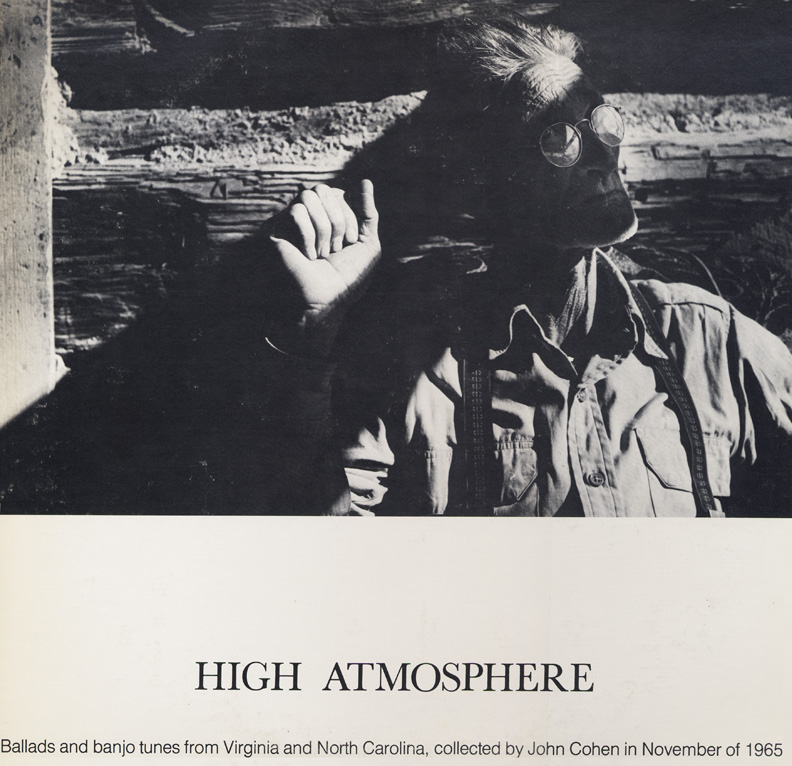
Sparked by the recent inaugural Uncle Tupelo tribute show in St. Louis, I am posting some chapters from my unpublished musical memoir that deal with those guys. This is Chapter 80, so it follows immediately upon my previous post, "No Chris Bess".
Jamming with the dead
By Chris King
Toward the end of that summer, Uncle Tupelo finally released the record they made with Peter Buck of REM. I didn’t rush right out and buy it. I was broke, thanks to my broken foot, and I wasn’t keeping up with post-punk bands as I once had. I was too busy casting my musical glance backward through the folklore stacks. Rampant buzz about the new Uncle Tupelo record began to draw me in, though. From the sound of it, I was hardly the only Cicero’s songster who had caught the folklore bug.
I eventually broke down and bought the record, which was titled after the session dates, March 16-20, 1992. It did require some breaking down on my part, because acute gig envy had set in by then. Everything I had heard about this record made me wish that it was our record. In the wake of a pop album, Still Feel Gone, and on the verge of a major label signing, Uncle Tupelo had gone to Athens, Georgia, holed up with the guitar player of REM, and recorded an acoustic batch of mostly traditional music. Brian Henneman from Chicken Truck went down with them to play on it, everything from slide guitar to mandolin. All of this sounded like a perfect description of the right thing to do.
I could hardly believe my ears when I finally dropped needle on vinyl. Not only were these guys digging in the same folkloric dirt I was digging in, they had even struck the same gold – and staked the first claim.
I had been dumping hundreds of folklore records onto cassettes in the basement of the Wash. U. music library. Nothing – other than Harry Smith’s Anthology of American Folk Music – got deeper under my skin than a collection of Appalachian field recordings called High Atmosphere. This was bare-knuckle, gutbucket stuff. Mostly spare, sparkling banjo miniatures, with shivery unaccompanied ballad singing and truly strange story songs.
My favorite of the songs – “Rolling Mills are Burning Down” by a guy from Marshall, North Carolina named George Landers – had the wildest vocal I had ever heard. The vocal staggered around a wobbly banjo figure with slurry recklessness, like a wild-eyed drunk that couldn’t stay on his feet. The garbling of the words felt like part of the emotion of the song, as if the guy could hardly bear to spit out his story, an incoherent tale about torched mills on fire, a girl gone wrong, and a longing for the cold grave.
Some guy named John Cohen made these field recordings back in 1965. He got such good material, he suggested in his liner notes, because he went around asking for banjo tunings. A technical opening question about their instrument seemed to put the mountain men at ease. The result were these intense, unguarded, almost unbearably intimate performances. Part of the record’s addictive quality, for an amateur folklorist like me, was the running thread of conversation between John Cohen and his mountain sources. At the head and tail of the tunes, you could hear Cohen’s calm, likable voice encouraging the musicians, whose speech had grit and character equal in fascination to their rustic instruments and songs.
I was all on my own in the folklore stacks. I had never seen a copy of High Atmosphere (issued by Rounder on LP in 1974) anywhere outside of the Wash. U. music library basement. No one I knew seemed to even know it existed. Now, spinning on my turntable, was unmistakable evidence that Uncle Tupelo had gone down to Athens, sat around with Peter Buck of REM, and recorded some of these songs!
Three of their old time covers – “Satan, Your Kingdom Must Come Down”, “Warfare,” and “I Wish My Baby Was Born” – all appeared on High Atmosphere. It was obvious from the Uncle Tupelo recordings in Athens that the High Atmosphere versions were the sources of their songs. The coincidence pretty much knocked me out. As I blabbed about this discovery at Cicero’s, one of the basement bar’s beautiful bartenders, Heather Crist, confirmed that Jeff Tweedy had become fixated on one particular tape of Appalachian field recordings. “He was playing it constantly when we were driving around,” Heather said, as she poured me a beer. So Tweedy was even turning Cicero’s barmaids onto this shit. My gig envy got far worse.
That Uncle Tupelo’s versions of these songs were thin and unconvincing compared to the High Atmosphere originals was no consolation. Nobody my age – perhaps no American alive – could touch the voices of those old mountain men and women. Worlds have disappeared since they sang. Something in their singing was one of the things that went away. No contemporary cover version could recapture it. At least Uncle Tupelo had the sense and guts to grasp this forgotten document of that lost world, learn the material word for word and note for note, and put these fabulous songs into play once again.
Of course, reviving mountain music was as old as the hills in 1992. I didn’t know it at the time, but John Cohen had played with Mike Seeger in the folk revival combo New Lost City Ramblers. Cohen was right in the heart of the folk revival of the ‘50s and ‘60s, which would turn back into rock & roll when Bob Dylan plugged in. But I had skipped over the folk revival of the previous generation, bypassing the middlemen. I stumbled from post-punk right into the ancients themselves, face to face in the folklore stacks.
And now, some guys my age – who grew up in the same basement bar as me – were waking up the ancients, the very same ghosts I had claimed for my own. Uncle Tupelo wasn’t content to enshrine the dead, however: they poured them a shot of moonshine and jammed with them in Georgia.
I felt the same urgency as when I first heard Butt of Jokes bust out songs in the spirit of the Meat Puppets at a campus battle of the bands, when I was a lonely college transfer student, alone with all of this new music and nobody to share it with me. My sacred text wasn’t my secret, after all. It was still sacred, but it wasn’t a secret. It was out in the open, walking around, looking for gigs.
And what do you know? The guys from Butt of Jokes were my buddies now. They were my bandmates. So was a pretty good banjo player in the hills of Tennessee, who happened to be learning the art of capturing sound on tape.
Folklore wasn’t a basement in a university music library. It was a wide open road.
*
From And Let Him Ply His Music: Adventures in Post-Punk and Amateur Folklore (unpublished).
*
Previous posts in this series
In the hothouse basement
The allure of the ever-elusive exposure gig
Opening for Uncle Tupelo
A meeting in Old Blue
Strangers in the village
Managing your religion
A farewell to Old Blue
Trading horses
No Chris Bess
Sunday, December 12, 2010
No Chris Bess

Sparked by the recent inaugural Uncle Tupelo tribute show in St. Louis, I am posting some chapters from my unpublished musical memoir that deal with those guys. This is Chapter 79, nine chapters on from my previous post, "Trading horses".
No Chris Bess
By Chris King
The front and back of gigbooks from our years on the road always have hand-drawn calendars, crowded with tour itineraries, details for court appearances (I had a parking ticket problem), and other bits of crucial dated information. “Pay doctor! Pay hospital!” starts popping up in the summer of 1992, after I broke my foot playing football on tour, and stretches longer into my future than I care to remember. And another phrase becomes common as that summer faded into fall: “NO CHRIS BESS”.
Scheduling around Chris Bess’ absence when he drove to Massachusetts to play on the second Uncle Tupelo record, Still Feel Gone, became a pattern. It got more and more convoluted as Chris’ services became more widely known through our travels across the country. Now I was trying to schedule a traveling band around a traveling accordion player.
In a way, we made things harder on ourselves. If there was a place on your stage for a charismatic sideman with comic gifts and virtuoso chops on accordion, then we were a mobile showroom for what you needed. As we slid into the category of goof rock, we were constantly paired with bands that drooled over Chris Bess. Quite a few of them got over their shy crush and asked him out, and quickly learned that he was an approachable guy who truly loved to play – and was starting to look for an escape hatch.
It’s human nature, and a law of the marketplace: don’t quit one job until you have found another one. In fact, take full advantage of the resources at the job you want to leave to land the job you want to have. Chris Bess never phoned it in with Enormous Richard – he played his butt off, every night – but he was certainly mailing out resumes from the stage.
And who would blame him? The guy liked a smooth, assured sound with a big, accessible shtick. Our ass pop period, which he had ushered in, had suited him just fine. Then Matt and I dumped the band upside down the second Elijah got back from Hong Kong and Johnny got bit by the Hasil Adkins gig bug. What was smooth and assured in our sound suddenly became nervy and unpredictable. Skuntry was a chaos that could be transcendent or godawful, from gig to gig, song to song, even moment to moment. It began to cut the big, accessible shtick that Chris Bess loved back to our old, problematic, messy hilarity.
If Enormous Richard actually held gagmen sessions, where we all sat down at a table and tore the act apart, perhaps we could have salvaged the Chris Bess version of the band, or at least ended it as adults. Instead, we were headed straight for the schoolyard.
Imagine Elijah, abandoning a dopey blues band in Hong Kong and settling down in middle Tennessee, where he knew no one. Then, on select weekends, he gets to join his buddies on the road to play songs with the flavor of his creativity all over them. He knows that Chris Bess now sprawls all over these songs, but Elijah has heard the grumbling, and he knows his old parts are more than welcome with us. He is back from Hong Kong and sprung for the weekend from the hills of Tennessee, and he is going to get his licks in, regardless.
I’m in a band! is what he’s thinking. He stretches out his long legs, encased in stretchy hippy pants. He takes that banjo solo, just like he always did, back when Chris was just a charming stranger who joined us in my sister’s basement to record one song for The Almanac. I’m in a skuntry band! Elijah thinks, as he takes that next banjo solo, too.
The song ends. Elijah wiggles his butt. He’s in a band! His banjo chops are coming back. This is cool! What’s the next song?
Elijah sees Chris Bess motioning to him. It’s the age-old come-hither gesture. Elijah watches the knob of his banjo so he doesn’t hit anybody in the head, and leans back toward Chris to hear what he has to say.
Chris Bess delivers a stinging slap to Elijah’s cheek.
“Let me take a solo once in awhile!” Chris Bess says, in his crabby-old-man voice.
To Chris Bess’ credit, he did convene something of a gagmen session, just before he quit. It was in the kitchen of the Marconi house. That dim, vermin-infested room was the only place where we ever sat together and looked each other in the face, and never for more than a few minutes.
On this night, Chris Bess surprised us with an ultimatum: he would stay in the band, but only if we added a new song to our set list. He produced a ukulele – Chris’ size is such that he really can produce a ukulele, as if from thin air – and sang his new song, “Funny Band from Hell”. I can't say any of the words come back to me now, but I’m sure you get the gist from just the title. This was his I Hate Enormous Richard song.
The songwriting was on the wall.
Chris quit abruptly that fall. He stepped to the mike as we were finishing a gig and announced that he had just played his last show with Enormous Richard, and that was that.
I haven’t set foot onstage with Chris Bess in going on twenty years, and I never see him anymore. But I can always hear his playing, no matter what I’m listening to, if I so desire. It’s an interesting consequence of playing a lot of music with someone, particularly if the musician in question is forceful and original in his playing, as Chris Bess always was.
It’s like I have a Chris Bess track burned into my brain. No matter what is on my stereo, I can mix him in, if I wish. All I have to do is ask my imagination to turn up the accordion, and all of the sudden I hear Chris Bess, his characteristic swelling and surging, his bold and subtle flourishes, his solos that always add to the momentum of the song. It’s the greatest gift one musician can leave with another at the end of the gig.
*
From And Let Him Ply His Music: Adventures in Post-Punk and Amateur Folklore (unpublished).
*
Previous posts in this series
In the hothouse basement
The allure of the ever-elusive exposure gig
Opening for Uncle Tupelo
A meeting in Old Blue
Strangers in the village
Managing your religion
A farewell to Old Blue
Trading horses
*
This stage shot of us pulling our Pale Richard stunt when opening for Pale Divine is one of the few surviving shots of Chris Bess onstage with us.
Saturday, December 11, 2010
Trading horses between skuntry and ass pop

Sparked by the recent inaugural Uncle Tupelo tribute show in St. Louis, I am posting some chapters from my unpublished musical memoir that deal with those guys. This is Chapter 70, just around the corner from my previous post, "A farewell to Old Blue".
Trading horses
By Chris King
When we finally recorded a follow-up to (Why It's) Enormous Richard's Almanac in February of 1992, it was a compromise between ass pop and skuntry. The record straddled a line that divided the band into two camps, the accordionist Chris Bess vs. the drummer Matt and me.
Junior, the former child clown, was never quite accepted as possessing an adult vote. Skoob was always a silent partner. Prop him up with a pitcher of beer and a borrowed cigarette and he would chop chords all night long without asking any questions, other than for directions to the bathroom. As for Guitar Karl, he was gone.
The return of Lij had evaporated him. They both occupied roughly the same spot on the gig spectrum: the unpredictable, trippy guy with a natural musical gift. Having them in the same band was like having two guys in the same room at the same party wearing the same bizarre hat. One guy has to leave — or knock off the other guy's hat and beat the shit out of him. Karl left.
There was something of a parting fight — in Louisville, of course. Drunk at an afterhours party, Karl picked up Skoob's acoustic guitar and broke into "Whiskey Bottle", an Uncle Tupelo dirge. I have never liked that song. It strikes me as so ponderous that it verges on a parody of world-weariness.
Whiskey bottleThe symbolism is just kind of beating me over the head with a whiskey bottle here. But it spoke to Guitar Karl in the dark hours of the rock & roll night. It became the only song he wanted to play when he was desperately drunk at the end of a night on the road.
Over Jesus
Not forever
But just
For now
That night in Louisville, as he started to belt out the Tupelo dirge once again — not forever, but just for the fifth night in a row — I impolitely suggested that he stop. "This station is really overplaying this song," I said. Which touched Karl off to remark that he had been forced to sit through a fuck lot more of my singing than I would ever be subjected to his. "And, frankly, your singing sucks!" he said. "You contribute nothing melodically to this band!"
"I might suck as a singer," I came back at him, "but I wrote almost every melody we play. I'm still waiting for you to write an actual guitar part. The only actual guitar parts you play, you copped from Guitar Johnny. Everything else is just acid head doodle."
To bounce back from heartless attacks like these, you have to both really want to be together again. That wasn't the case for either one of us. So Guitar Karl was gone.
Lij still had no urge to occupy our guitar chair. He was itching to reclaim and further his fiddle and banjo chops. Chris Bess urgently did not want this to happen in the context of our upcoming recording sessions. I can seldom quote Chris Bess from memory, because he was not very verbal when it came to confrontations. His method was to throw up his arms, say something abrupt and scornful, and walk away, leaving the rest of us to sort it out. "I guess Chris Bess doesn't want Elijah in on this thing," for example.
Chris' wishes seemed fair on that point. We had a well-honed set list of ass pop that really didn't cry out for jagged banjo or scratchy fiddle. So we set Elijah to work on the next batch of songs, mostly mail-order collaborations with Guitar Johnny, and began negotiations toward finalizing the electric guitar and studio choices for the recording.
Of course, there were no actual negotiations. Junior soaked it all up, Skoob soaked in beer, Matt and I confided in each other, and Chris Bess threw up his arms in scorn and walked away. In this manner, we arrived at a guitar player, Ayatollah Joe, and a new engineer, good old Meghan Gohil, our Wash. U. chum who set up and then slumbered through the Almanac sessions.
It occurs to me, now, listening to the recordings we made that winter, that if Ayatollah Joe and Guitar Karl had ever taken a road trip together, they could have easily agreed on a selection of road tapes. Karl was a classic rocker, but Joe was also formed by the 70s — particularly Neil Young and the early, brutal Aerosmith. The best Joe could do in the context of ass pop were spidery lines that sounded a little like Robbie Krueger of The Doors. Guitar Karl could have envisioned and played those parts, if only one of us had thought to say, "Treat it like a Doors song."
Ayatollah Joe's approach failed on us in the studio twice — on one song from each camp. For our skuntry contingent, Joe couldn't get the right grungy sound on a goofy piece of country post-punk called "Freezer Full of Meat". So I enlisted Brian Henneman, of Chicken Truck and the Uncle Tupelo crew. Brian came over to the Marconi house one biting cold day and laid down the original Chicken Truck shit tone for us.
For Chris Bess' ass pop song, his only composition on the record, he wanted no part of Ayatollah Joe (or Elijah, God knows). Chris called in his friend Scott Roever from the Tree Weasels and EJ Quit, who played slick and precise and went along with Chris' preference for reverb-drenching. These watery guitar tones surrounded a funny, gutsy Chris Bess song about the Marconi neighborhood, "The Hill".
"We are Italian in every way," Chris Bess sang, "except on St. Patrick's Day".
Horse trading continued between the ass pop and skuntry camps in the band as I raised money to release our record. This was my one successful piece of fundraising in a life of mostly making do without dollars.
As I borrowed money from Cicero's — $500 interest-free against future earnings garnished at the door — Ayatollah Joe asked us to contribute to a compilation he was producing, St. Louis Schoolhouse, a bunch of local bands coverings songs from Schoolhouse Rock, the educational television snippets we all grew up watching. Matt and I chose "Interjections" — and gave Chris Bess a leading role in the recording. Chris got to spit out all of the interjections (hooray! aww! eek! drats! wow! hey!) and did so with maximum hilarity and spirit. Of course, Ayatollah Joe — the skuntry pick — played guitar on our song.
As I borrowed money from Joe Edwards at Blueberry Hill — $500 interest-free against future earnings garnished at the door — those shitkicker yo-yo friends of ours, The New Duncan Imperials, asked Chris Bess if Enormous Richard could contribute a track to a compilation they were producing: rock bands coverings songs released by K-Tel on their cheesy "Classic Hits from the 70s" series. Chris Bess chose "Music Box Dancer" by Frank Mills — and let me sing the lead vocal. His friend Scott Roever, of course, played guitar on Chris Bess' project. (Uncle Tupelo also did a cheezy cover for the occasion, "Movin' On".)
So we had achieved an uneasy truce.
Lij appeared on none of these winter recordings. But there he was in the hills of Tennessee, practicing his banjo and fiddle when he wasn't learning how to capture music on tape. Guitar Johnny kept dragging his roadhouse guitar out of the closet every time a songwriting tape appeared in the mail. The old, original, skuntry Enormous Richard was stirring to life, like a drunk who had slept through the best hours of the party.
*
From And Let Him Ply His Music: Adventures in Post-Punk and Amateur Folklore (unpublished).
*
mp3s
"Freezer Full of Meat"
(King, Minkoff)
Enormous Richard
with Brian Henneman
From Answers All Your Questions (1992)
"The Hill"
(Bess)
Enormous Richard
with Scott Roever
From Answers All Your Questions (1992)
Previous posts in this series
In the hothouse basement
The allure of the ever-elusive exposure gig
Opening for Uncle Tupelo
A meeting in Old Blue
Strangers in the village
Managing your religion
A farewell to Old Blue
*
The image is Lij (in Skeletor mask) jamming with Guitar Johnny in the van that replaced Old Blue. I tried to name it "Big Orange Guy," but the name never took.
Subscribe to:
Posts (Atom)

 Posts
Posts


